
Toyota RAV4 vs. Honda CR-V
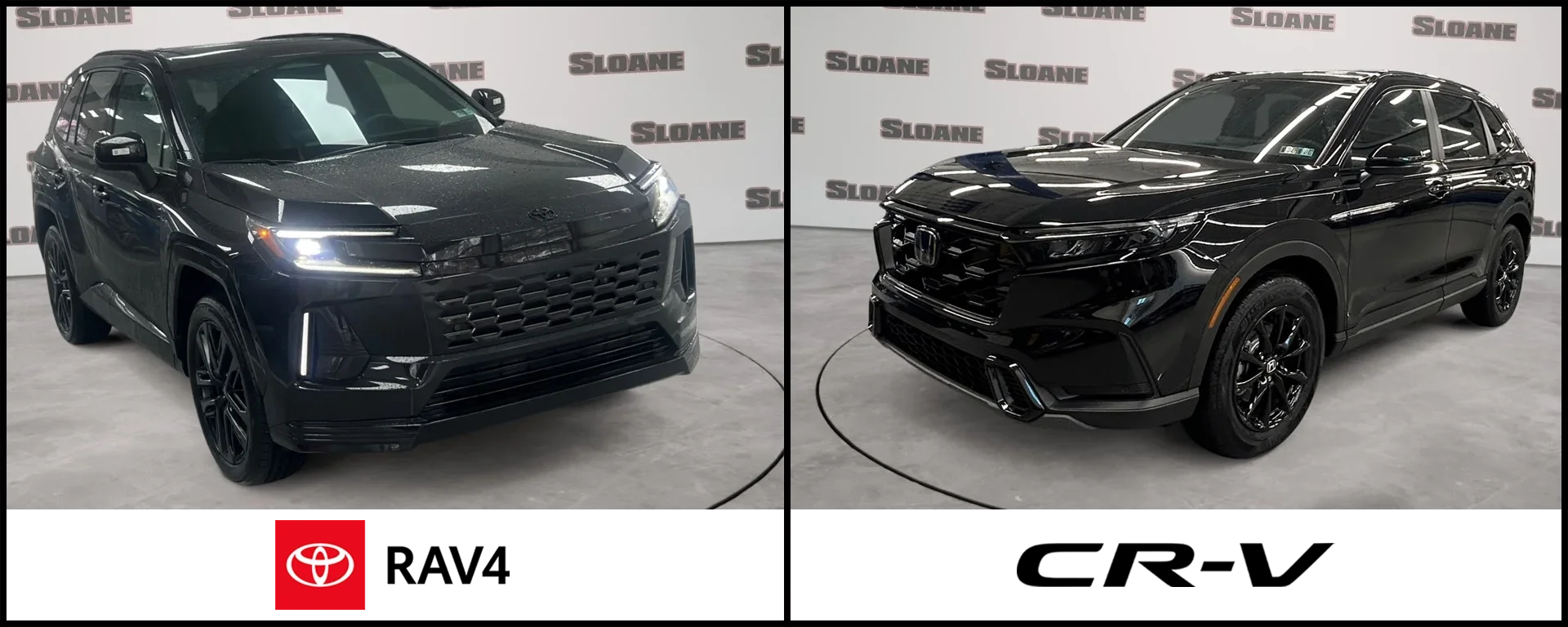
Toyota made a bold move in 2026 with its most popular SUV. The RAV4 is now hybrid-only, and the traditional gas engine is gone.
The 2026 Honda CR-V still offers both a turbocharged gas engine and a hybrid.
That difference changes everything: starting price, fuel economy, how the trims are structured, and which SUV fits which driver.
Below, Sloane Automotive Group compares the 2026 Toyota RAV4 and Honda CR-V across performance, space, technology, safety, and overall value.
We Sell Both. Here's Why That Matters.
Most comparison pages come from one of two places: a Toyota dealer pushing the RAV4, or a Honda dealer pushing the CR-V. Sloane Automotive Group sells and services both. We won't steer you toward one over the other. And unlike automotive review sites, you can take the next step here. Shop inventory, compare trims, get pricing, or ask our team a question. No need to visit multiple websites.
Jump to a Section
Quick Comparison
Choose the RAV4 if:
- You want a hybrid on every trim.
- You want stronger horsepower and better fuel economy.
- You want more rear headroom and higher towing capacity.
Choose the CR-V if:
- You want the option of a traditional gas engine.
- You want more rear legroom and more max cargo space.
- You prefer a smoother, more carlike driving feel.
Want to quickly decide between the Honda CR-V and Toyota RAV4?
See which compact SUV fits you best in 60 seconds. No personal info required.
What's your budget?
How would you describe most of your driving?
Who and what are you usually carrying?
What matters most to you when you're behind the wheel?
What matters most to you about owning a car long term?
The 2026
Honda CR-V
Sloane Automotive GroupThe CR-V is the better fit based on your answers. More rear space, a smoother and quieter ride, and available as a gas or hybrid depending on your budget.
Why The CR-V Is Your Match
The 2026
Toyota RAV4
Sloane Automotive GroupThe RAV4 is the better fit based on your answers. Every trim is a hybrid, it produces more horsepower than the CR-V, and Toyota's reliability reputation is hard to argue with.
Why The RAV4 Is Your Match
Fuel economy is your top priority, so the Toyota RAV4 Plug-in Hybrid is also worth a look. It adds electric-only driving for shorter trips and even higher efficiency. It costs more than most RAV4 and CR-V trims. See RAV4 Plug-in Hybrid inventory.
2026 Toyota RAV4 vs Honda CR-V Base Hybrid Specs
| Category | 2026 Toyota RAV4 LE FWD | 2026 Honda CR-V Sport Hybrid FWD |
|---|---|---|
|
Starting MSRP
|
$33,350
|
$37,080
|
|
Powertrain
|
2.5L 4-cyl hybrid
|
2.0L 4-cyl hybrid
|
|
Total Horsepower
|
226 hp
|
204 hp
|
|
EPA Combined MPG
|
43 mpg
|
40 mpg
|
|
Headroom (front/rear)
|
37.7 in / 39.5 in
|
38.2 in / 38.2 in
|
|
Legroom (front/rear)
|
41 in / 37.8 in
|
41.3 in / 41 in
|
|
Cargo Space (rear seats up)
|
37.8 cu ft
|
36.3 cu ft
|
|
Max Cargo Space
|
69.8 cu ft
|
76.5 cu ft
|
|
Towing Capacity
|
1,750 lbs
|
1,000 lbs
|
What’s New for 2026
The biggest change for 2026 comes from Toyota.
Every RAV4 model now uses a gas-electric hybrid powertrain. The traditional gas-only engine has been discontinued.
The 2026 CR-V still offers a turbocharged gas engine, plus a hybrid option. Buyers can choose the powertrain that fits their preferences.
Pricing and Value
The 2026 Toyota RAV4 starts at $33,350 MSRP. The 2026 Honda CR-V Hybrid starts at $37,080 MSRP. That puts the RAV4 at a noticeably lower starting price.
Both SUVs offer available all-wheel drive. Adding AWD increases the price by $1,400 on the RAV4 and $1,500 on the CR-V.
The CR-V's traditional gas engine starts at $32,370 MSRP, which may appeal to buyers looking for a lower entry price.
As you move up the trim ladder, pricing between the two SUVs becomes much closer. Well-equipped versions of both models can reach the mid-$40,000 range depending on options and drivetrain.
If you're open to other options in this price range, our SUVs under $40,000 tool compares models across our brands that start below that mark.
2026 RAV4 Availability
One factor in this comparison doesn't show up on a spec sheet: which one you can drive home.
Demand for the hybrid-only RAV4 has outrun supply in 2026. Most RAV4s arriving at our Toyota stores are sold before they reach the lot.
"Most customers that choose the RAV4 as their first choice will wait for the vehicle they want to come in," said Brett Younger, general manager of Sloane Honda and Sloane Toyota of Philadelphia, in a July 2026 interview. "We do occasionally lose business to competitors because the customer gets tired of waiting or has another pressing issue, but it doesn't happen as often as you might think."
The CR-V is easier to find in stock, in both gas and hybrid form. So the practical question is your timeline. If you can wait, ordering the RAV4 you want is the normal path right now. If you need a vehicle this month, on-lot availability may decide this comparison for you.
Performance and Driving Experience
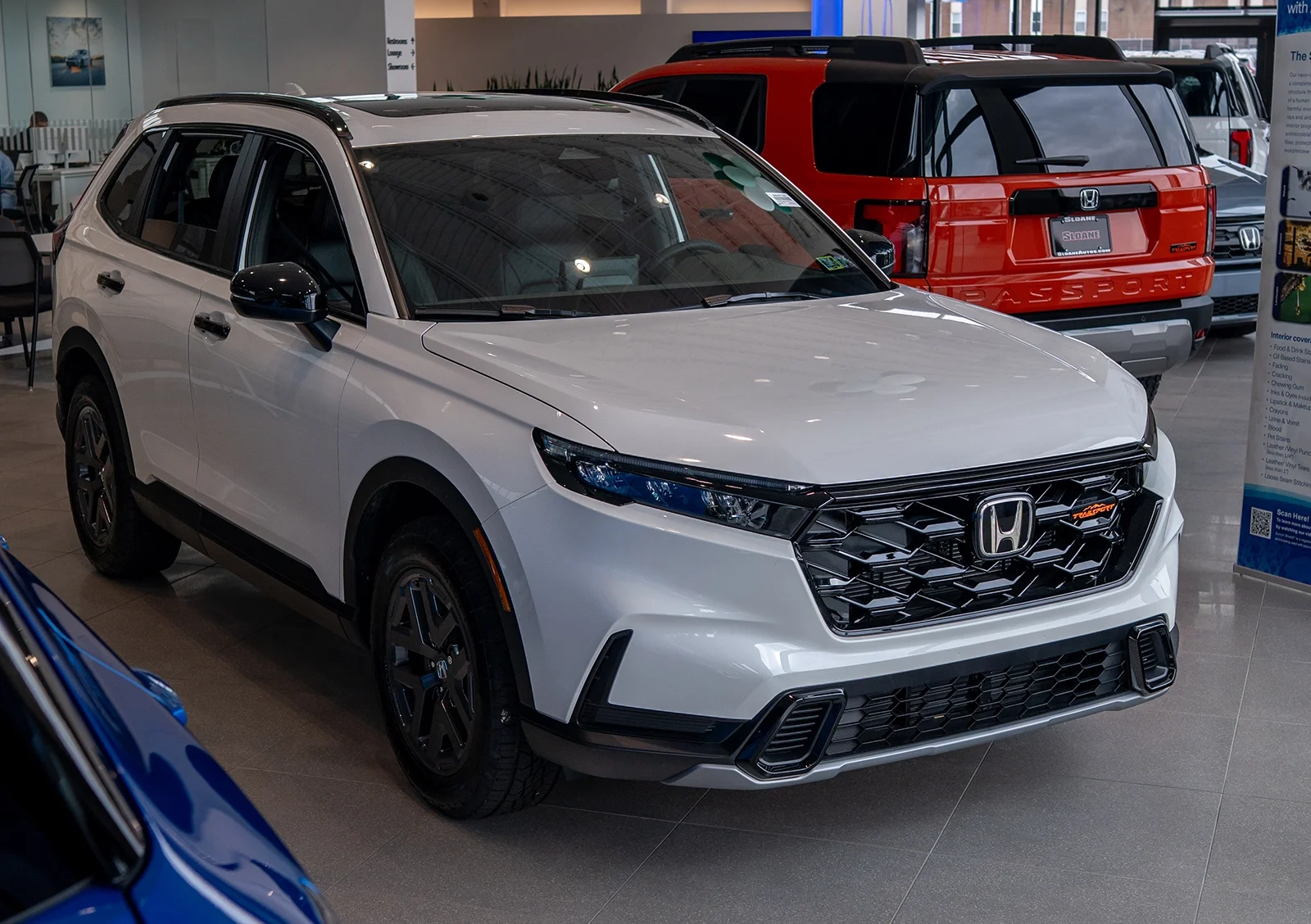
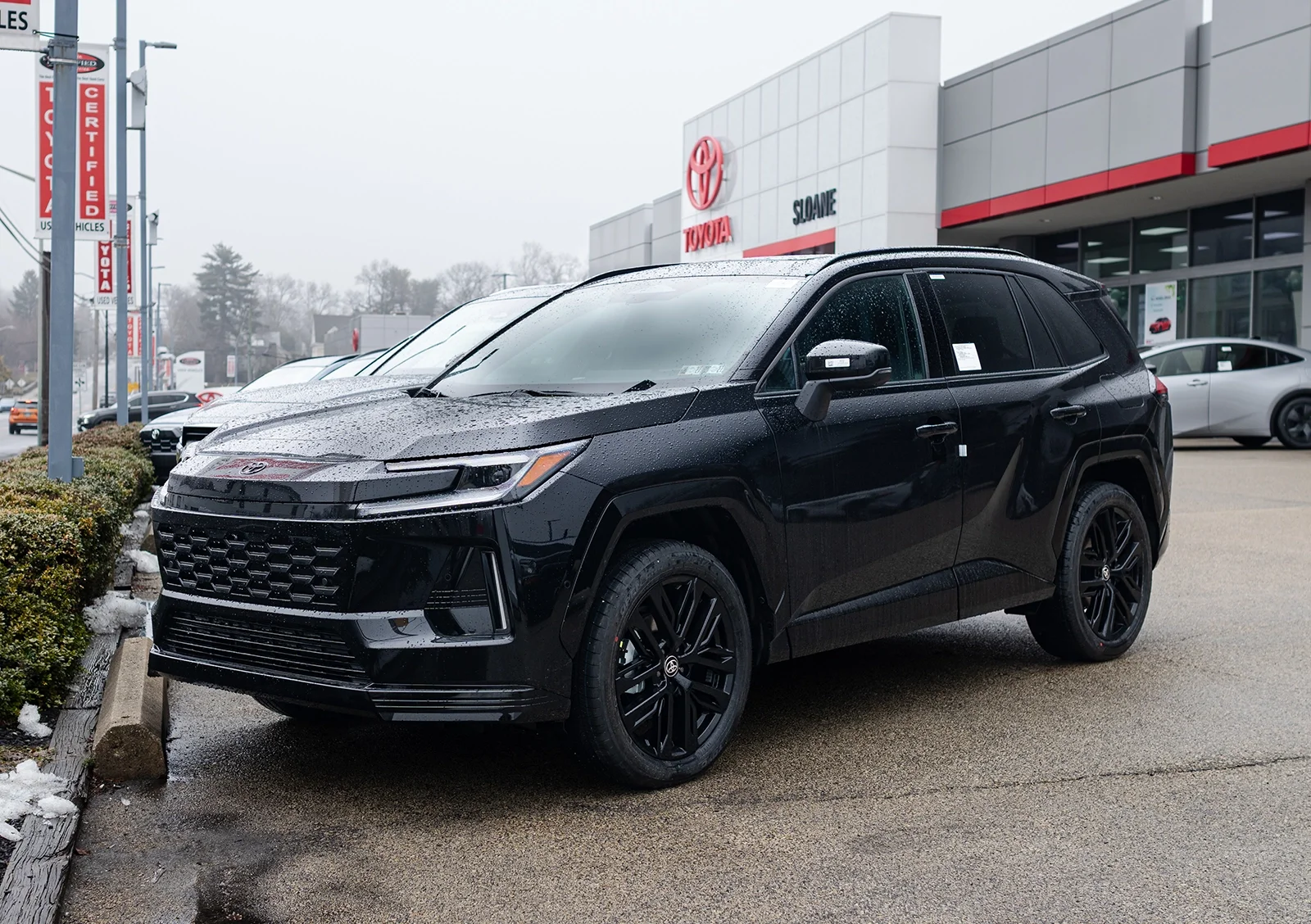
The RAV4 has the edge in power. Its hybrid system produces 226 horsepower in front-wheel drive form, compared to 204 horsepower in the CR-V Hybrid.
Toyota also offers a plug-in hybrid RAV4 with significantly more power and limited electric driving range. That plug-in hybrid model isn’t included in this comparison.
The extra output can make the RAV4 feel quicker when pulling away from traffic lights or merging onto highways.
The CR-V Hybrid focuses more on smooth, predictable acceleration. Power delivery feels natural in everyday driving.
The two ride differently. The CR-V is the calmer of the pair over broken pavement and settles nicely at highway speeds. The RAV4 rides firmer and feels planted, but passes more road texture into the cabin on rough surfaces.
Steering and handling follow the same pattern. The CR-V feels more carlike and predictable. The RAV4 leans into a more rugged SUV character.
Both models offer available all-wheel drive for additional traction in snow, rain, or dirt roads.
Interior Space and Comfort
The 2026 Honda CR-V has slightly more passenger space overall. Front and rear headroom both measure 38.2 inches, and rear legroom stretches 41 inches. That extra rear legroom is one reason the CR-V is often praised for family comfort.
The 2026 Toyota RAV4 offers a bit more headroom in the rear, measuring 39.5 inches. Front headroom comes in at 37.7 inches. Legroom is slightly tighter than the CR-V, but still comfortable for most passengers.
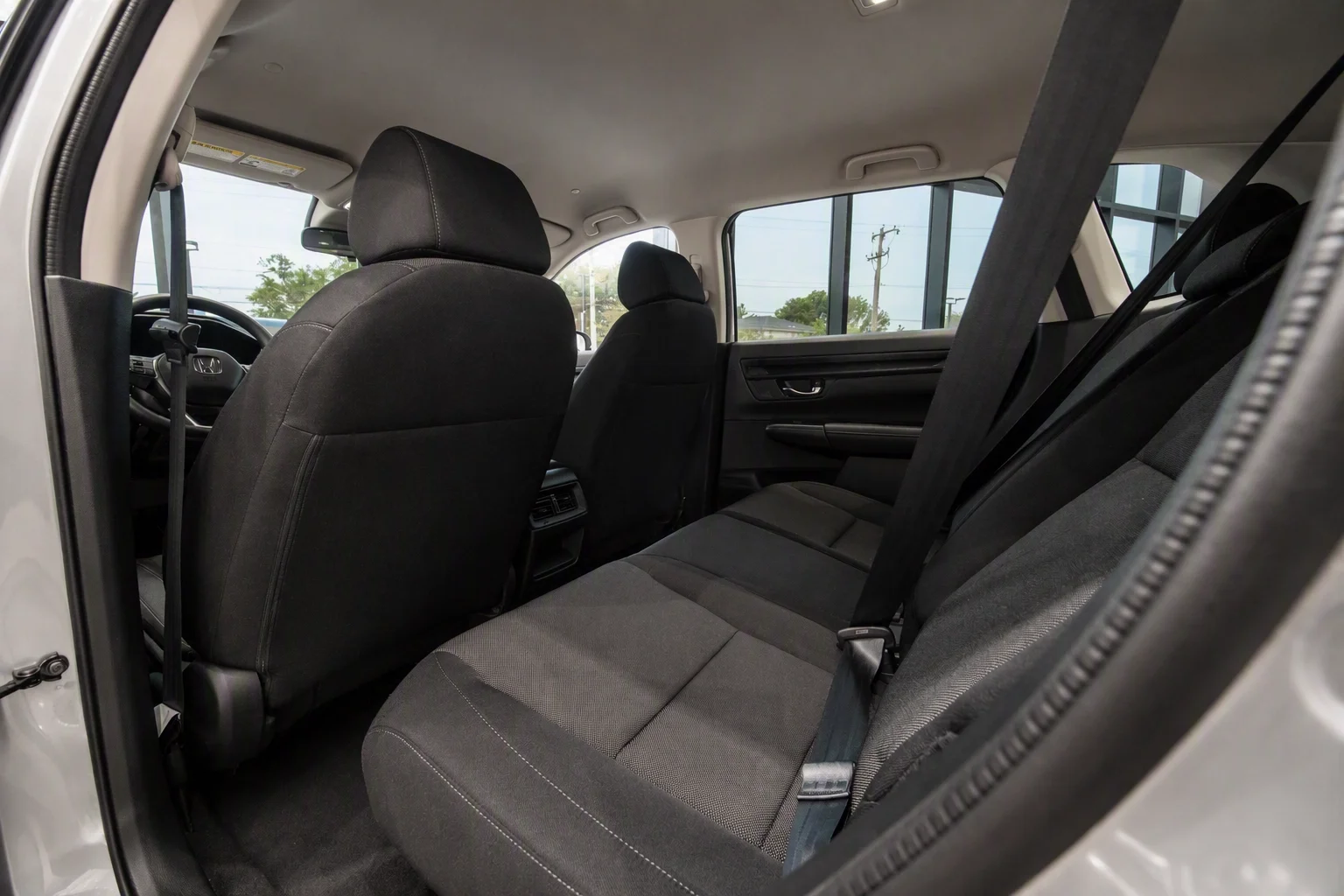

Exterior size between the two SUVs is similar. The CR-V is about four inches longer, while width and height are nearly identical. In everyday driving, both vehicles fit comfortably in most garages and standard parking spaces.
The CR-V offers 36.3 cubic feet behind the rear seats and up to 76.5 cubic feet with the seats folded. That gives it the edge in maximum cargo capacity.
The RAV4 provides 37.8 cubic feet behind the rear seats and up to 69.8 cubic feet with the seats folded. That means it offers a bit more everyday cargo space with the seats up.
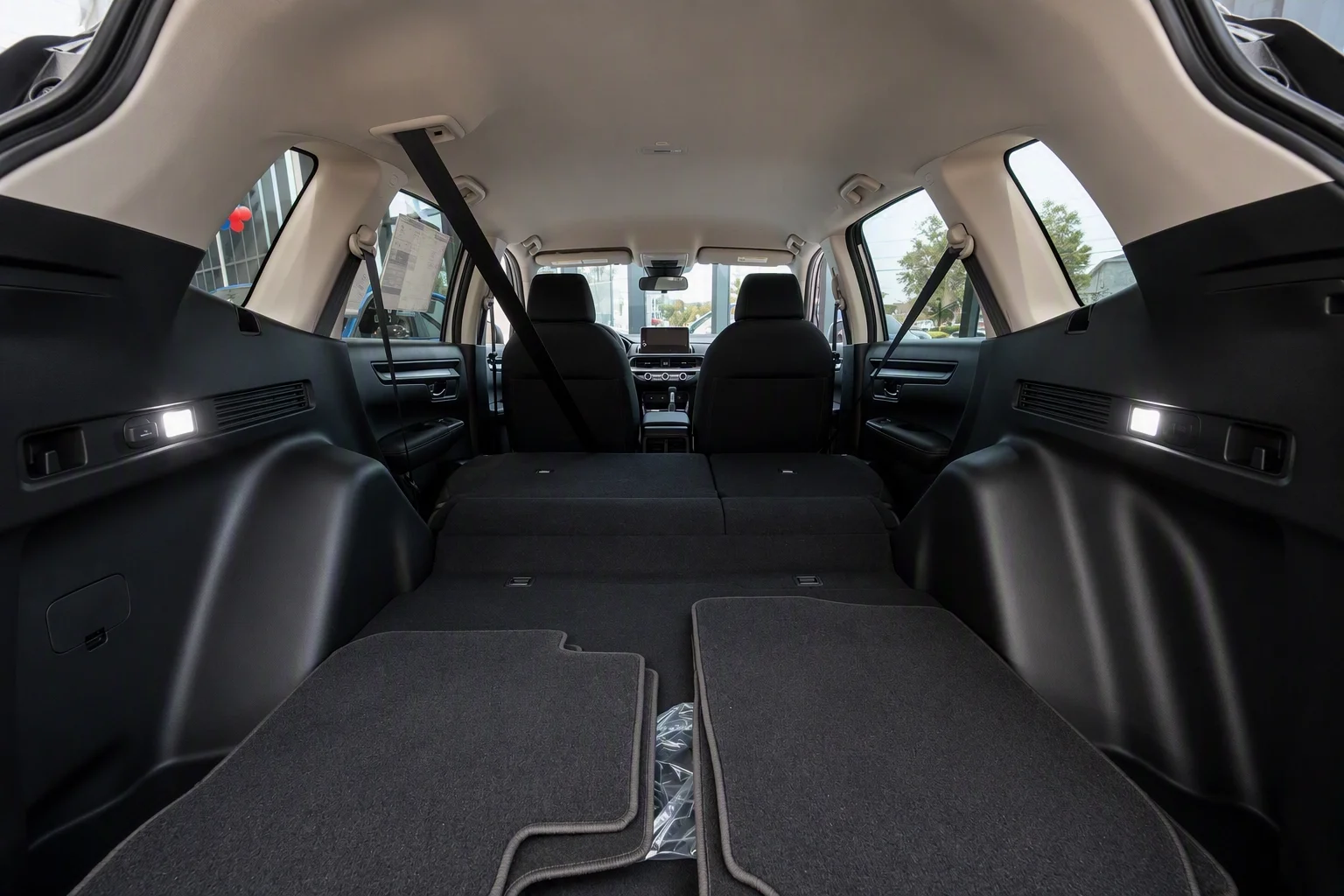
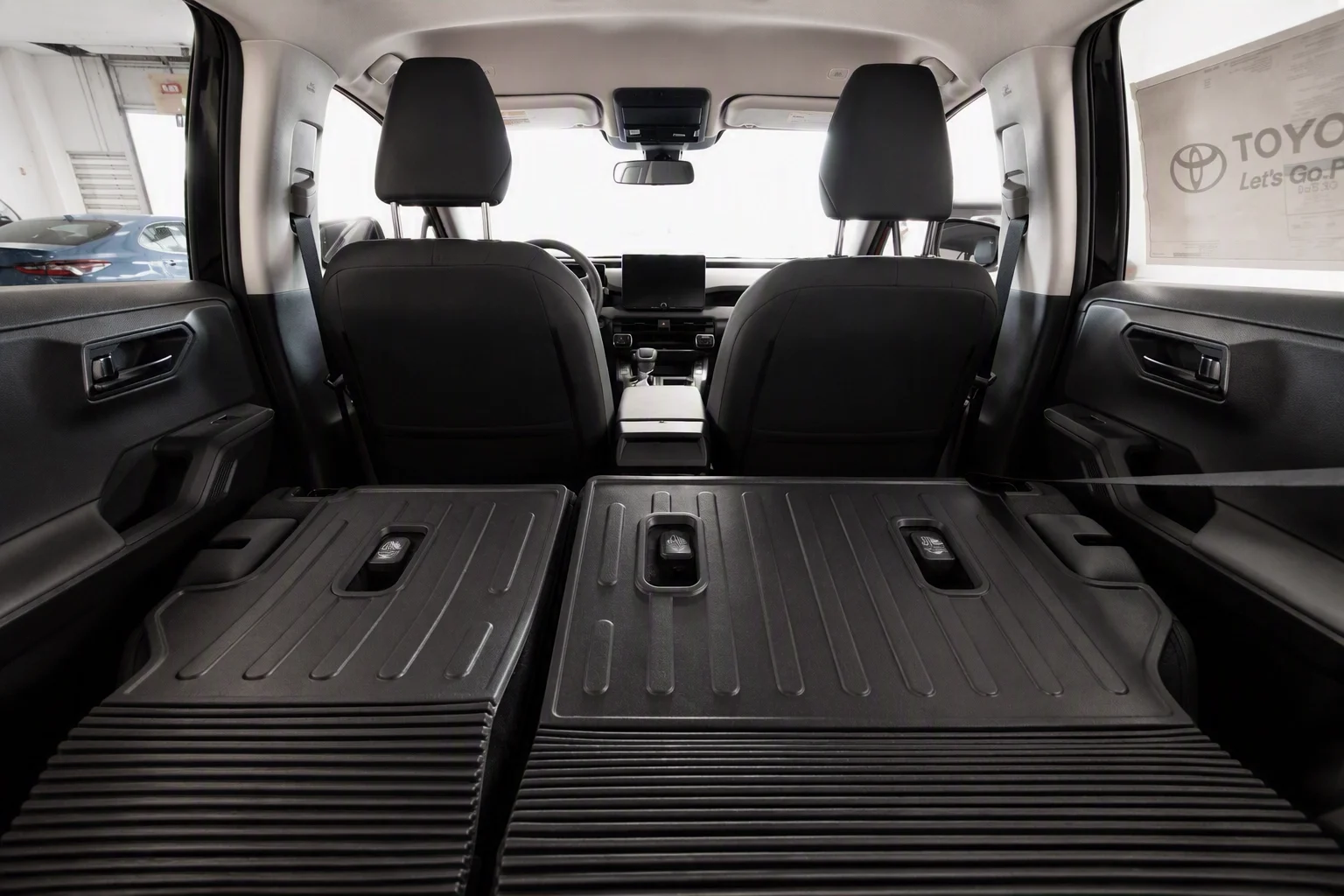
The two cabins have different personalities. The CR-V's feels airy and open, and the rear seat holds up well on longer drives. The RAV4's feels sturdy and practical, with useful storage and a layout that's easy to figure out on day one.
Technology and Infotainment
The 2026 Toyota RAV4 and 2026 Honda CR-V both offer wireless smartphone connectivity and large center touchscreens.
The main difference is screen size and system philosophy. Toyota leans toward larger displays and more customization, while Honda focuses on simplicity and ease of use.
Toyota RAV4 Technology
- Standard 10.5-inch touchscreen
- Available 12.9-inch touchscreen on higher trims
- Wireless Apple CarPlay and Android Auto
- Multiple USB-C ports throughout the cabin
- Available digital instrument cluster
Honda CR-V Technology
- Standard 9-inch touchscreen
- Wireless Apple CarPlay and Android Auto
- Available Google built-in with Google Maps and Assistant
- Available Bose premium audio system
- Wireless smartphone charging
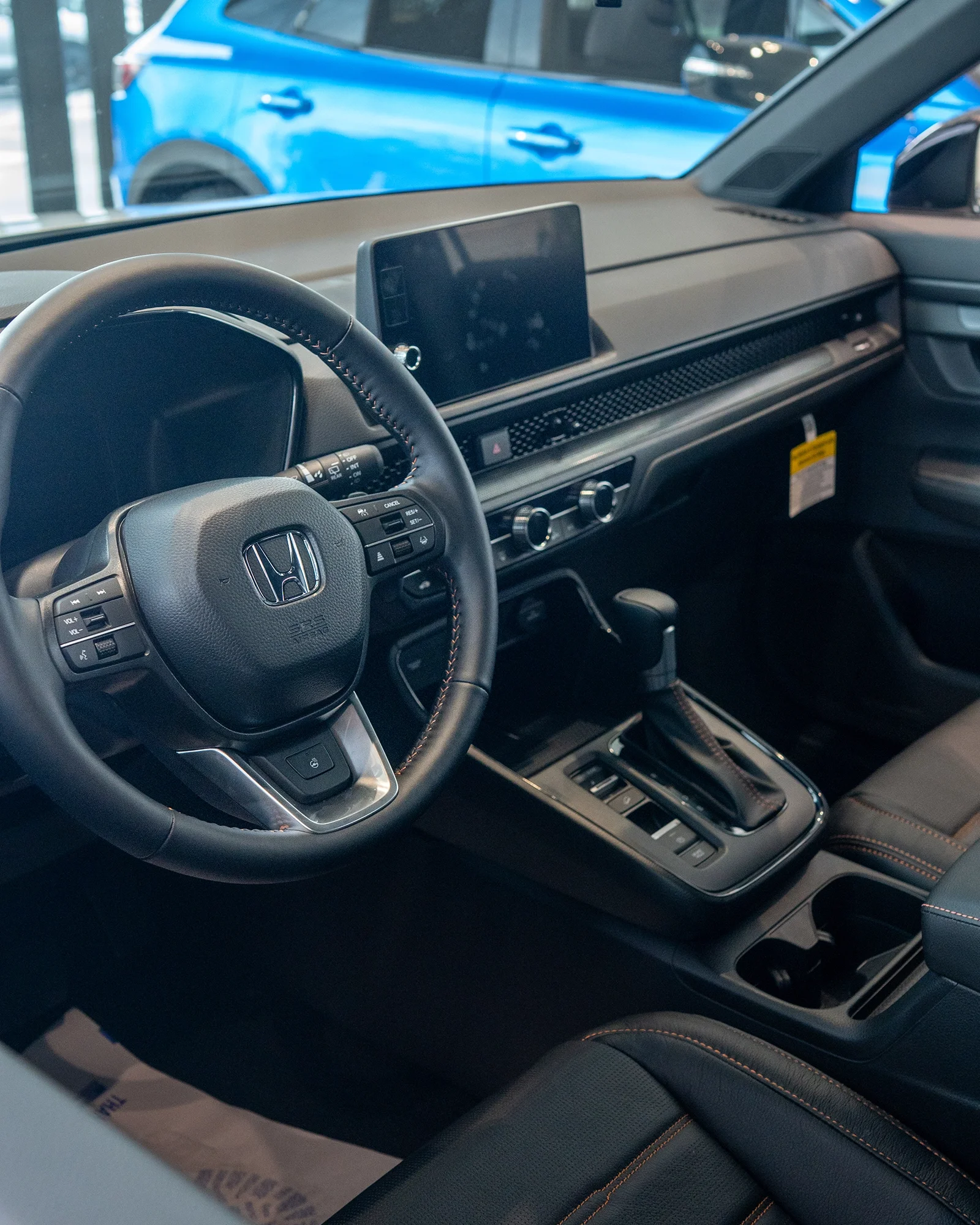
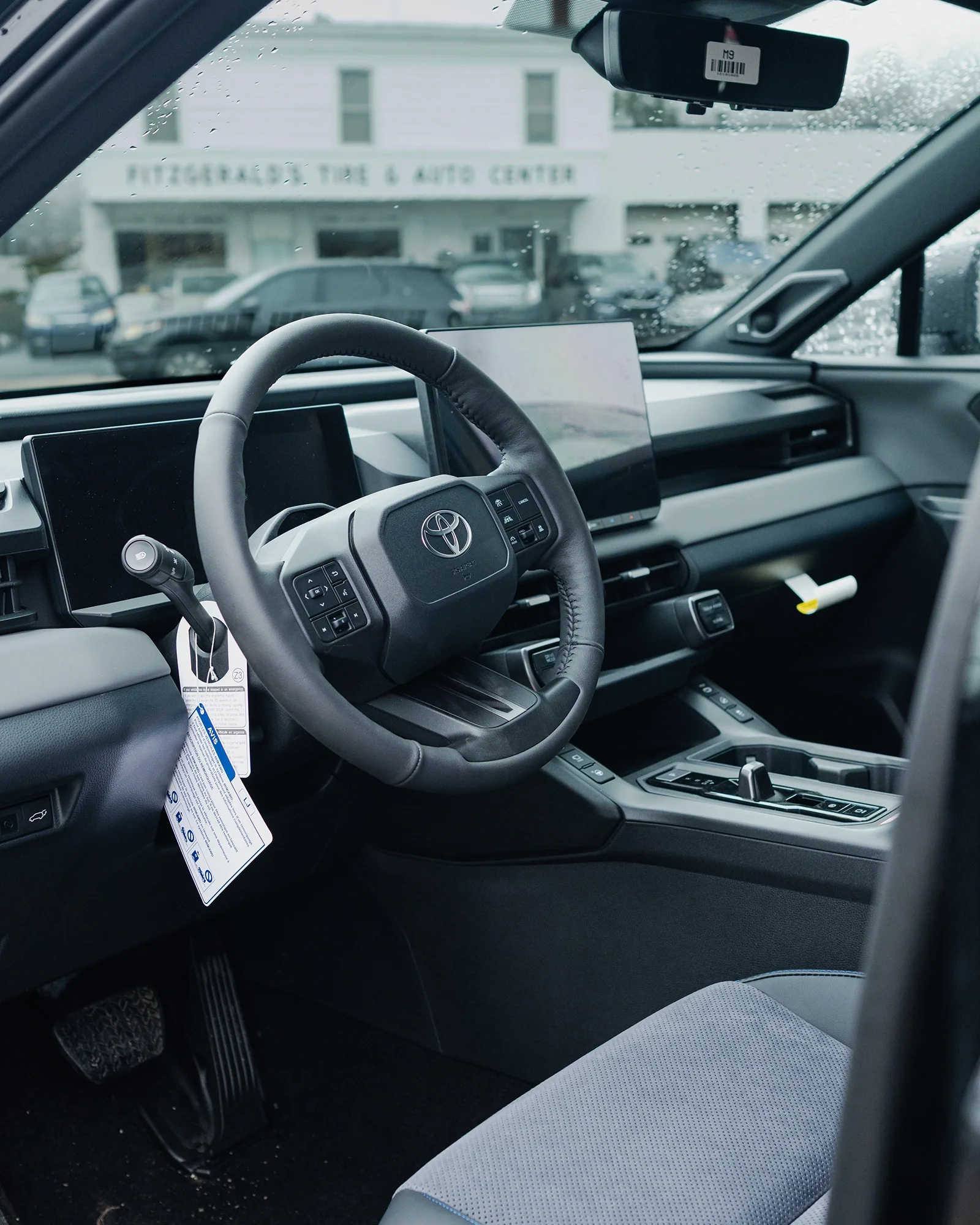
The CR-V system is straightforward, with physical knobs and simple menus. The RAV4 offers larger available displays and more customization, particularly on higher trims.
The choice often comes down to whether you prefer Honda’s simpler interface or Toyota’s larger screens and expanded display options.
Safety Features
The 2026 Toyota RAV4 and 2026 Honda CR-V both include full driver assistance suites as standard equipment. Toyota uses Toyota Safety Sense 4.0. Honda uses Honda Sensing.
Toyota Safety Sense 4.0
- Pre-Collision System with pedestrian, cyclist, and motorcycle detection
- Intersection support for turning and crossing traffic
- Dynamic Radar Cruise Control
- Lane Departure Alert with steering assist
- Lane Tracing Assist with lane centering
- Road Sign Assist
- Automatic High Beams
Honda Sensing
- Collision Mitigation Braking System
- Adaptive Cruise Control with Low-Speed Follow
- Lane Keeping Assist System
- Road Departure Mitigation System
- Traffic Sign Recognition
- Automatic High Beam Headlights
Both systems provide adaptive cruise control, lane assistance, and automatic emergency braking. In daily driving, they perform very similarly.
Some additional features such as blind-spot monitoring and rear cross-traffic alert may require higher trims depending on the model.
Crash safety ratings for both SUVs are strong. The Toyota RAV4 and Honda CR-V have earned top scores from the Insurance Institute for Highway Safety (IIHS) and the National Highway Traffic Safety Administration (NHTSA).
Trims and Lineup Overview
2026 Toyota RAV4 Trims
- LE
- SE
- XLE Premium
- Woodland
- XSE
- Limited
All RAV4 trims use Toyota’s hybrid powertrain. The Woodland trim adds rugged styling and light off-road capability.
2026 Honda CR-V Trims
- LX
- EX
- Sport Hybrid
- EX-L
- TrailSport Hybrid
- Sport Touring Hybrid
The lineup starts with two gas trims. Hybrid models begin with the Sport Hybrid. The new TrailSport Hybrid adds rugged styling and mild off-road upgrades.
Which trims sell the most? "They all sell really well, but of course right now affordability is the key for many people, so the lower trims always do well," Younger said. "Hybrids are what people are focused on for gas mileage."
Lineup Comparison
| Model | Gas Engine Available | Hybrid Available | Off-Road Trim |
|---|---|---|---|
|
Toyota RAV4
|
No
|
Yes (Standard)
|
Woodland
|
|
Honda CR-V
|
Yes
|
Yes
|
TrailSport Hybrid
|
Which One Should You Choose?
Numbers will only get you so far. The decision ultimately gets made in person.
"It usually boils down to comfort and style," Younger said. "They both have unique drivability. Right now, immediate availability plays into it as well."
Both SUVs have strong reputations for long-term reliability. Toyota and Honda consistently rank near the top of industry reliability studies, and both the RAV4 and CR-V are known for lasting well past 100,000 miles with proper maintenance.
Toyota RAV4
The Toyota RAV4 makes more sense if you want a hybrid on every trim, stronger fuel economy, and a little more power. It’s also the better fit if towing capacity matters or you like Toyota’s larger available screens.
Honda CR-V
The Honda CR-V makes more sense if you want the option of a traditional gas engine, more rear legroom, and a smoother driving feel. It’s also a strong choice if you prefer a simpler infotainment layout and a more relaxed ride.
When friends ask Younger which one to buy, he tells them this:
"You can't make a bad choice with either of these SUVs, so get in them, drive them both and see which one feels right for you. I love them both."
FAQs
Is the Toyota RAV4 or Honda CR-V better?
Both are strong compact SUVs. The RAV4 has better fuel economy and hybrid performance. The CR-V is better for ride comfort and rear seat space.
Which SUV gets better gas mileage?
The RAV4 delivers slightly better fuel economy. It’s rated for up to 47/40/43 mpg (city/highway/combined). The CR-V Hybrid is rated for up to 43/36/40 mpg (city/highway/combined).
Which SUV has more cargo space?
The Honda CR-V offers more maximum cargo space. It provides up to 76.5 cubic feet with the rear seats folded, compared with about 69.8 cubic feet in the Toyota RAV4.
Which SUV has more rear seat legroom?
The Honda CR-V has more rear seat legroom. It offers 41 inches compared with 37.8 inches in the Toyota RAV4.
Which SUV is better for snow or bad weather?
Both SUVs offer available all-wheel drive. With proper winter tires, either vehicle performs well in snow and poor road conditions.
Shop Toyota RAV4 and Honda CR-V at Sloane Automotive Group
This comparison is designed to help you understand the differences between the Toyota RAV4 and Honda CR-V.
Sloane Automotive Group sells both vehicles, which means you can compare them in one place instead of visiting multiple dealership websites.
You can explore inventory, compare trims, and test drive both SUVs to see which one fits your needs best.
Still Have Questions?
If you're still deciding between the RAV4 and CR-V, our team can help. Ask about trims, availability, or current offers.
Contact Us
Sales Hours
| Monday | 9:00AM - 7:00PM |
| Tuesday | 9:00AM - 7:00PM |
| Wednesday | 9:00AM - 7:00PM |
| Thursday | 9:00AM - 7:00PM |
| Friday | 9:00AM - 6:00PM |
| Saturday | 9:00AM - 5:00PM |
| Sunday | Closed |
